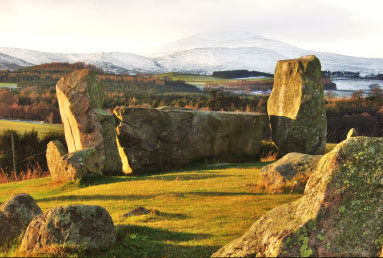

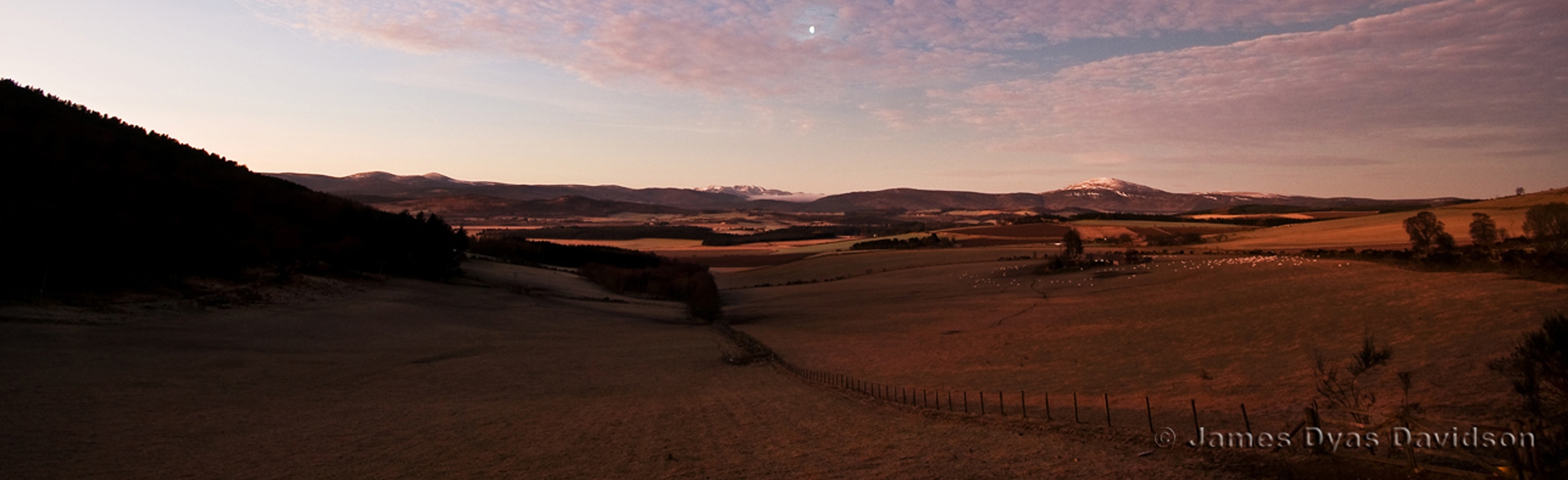
Tarland, set in the beautiful Howe of Cromar, has particularly good agricultural land which has made it favourable as an area of continuous settlement since pre- history. Evidence of early settlement is found in many places as the Ordnance survey map shows today. Drummie Woods and Drummie Moor have hut circles, the remains of early dwellings. There is the Earth House, a souterrain, at The Culsh, the Blue Cairn at Balnagowan and Tomnaverie, which is a fine example of a recumbent stone circle.
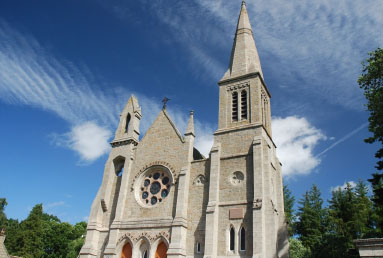
St Moluag's Church
The handsome Victorian church of St Moluag with it's beautiful rosary window, designed by Douglas Strachan, was erected in 1870 and provides an impressive backdrop to the Golf Course.
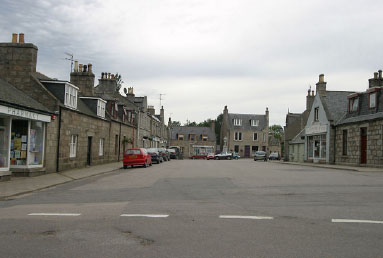
In the 18th Century Tarland was an important trading centre for a wide area. It was well served by roads, the Deeside Turnpike and the old drove roads. It had a weekly market and six fairs throughout the year. The land where these fairs took place exists today as The Market Stance. It was a piece of ground reflecting the status of Tarland among neighbouring villages, large enough to hold a great many animals, the livestock that would be bought and sold. The village thrived and had many businesses and traders around the Square, often with an agricultural base e.g. blacksmiths, wheel wrights, carpenters, saddlers.
The Deeside Railway, completed in 1866 bypassed Tarland which influenced its further development, leaving us with an exceptional village with The Square at it�s heart, set in a wonderfully varied landscape with ever changing panoramic views. Tarland has much to offer to the residents and to the visitor.